The security audit industry is broken.
Traditional audits are expensive, inconsistent, and increasingly detached from real security outcomes. Many rely on rigid frameworks and manual data collection, while much of the actual work has been outsourced to junior analysts following static checklists. The result: security theater that satisfies compliance but often fails to improve resilience.
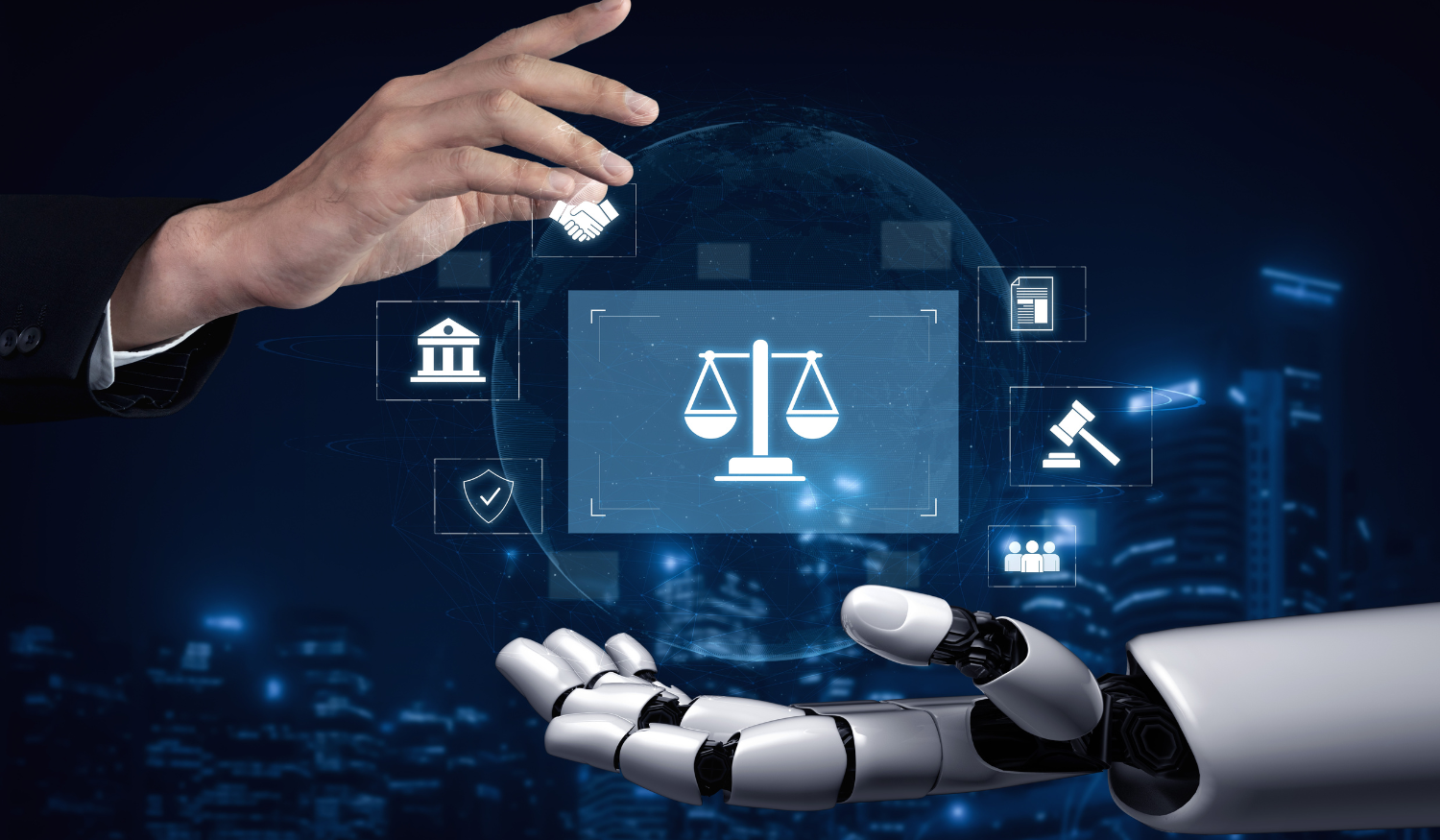
Given this reality, AI isn’t just capable of reshaping the audit—it’s already beginning to do so. And that’s a good thing.
The problem with human-driven audits
Security audits were designed to verify that an organization’s controls are working as intended. However, as digital infrastructure has become increasingly complex, human-driven audits have struggled to keep pace.
Much of the process is now formulaic: assessors request evidence, compare it to predefined controls, and check a box. This structure was built for a world of static networks and periodic testing, not for today’s fluid, cloud-first environments.
According to an IIA Pulse survey, more than 40% of internal audit leaders are actively researching AI, yet only 15% are using it today. That imbalance isn’t just inefficient—it’s dangerous. Manual processes cannot scale to the velocity of modern risk.
Why AI is poised to transform auditing
AI offers a path to both efficiency and accuracy by handling the repetitive, logic-driven aspects of assessment that humans aren’t well-suited to perform at scale.
Platforms using AI for compliance and audit preparation are already automating core tasks such as:
- Control generation: Using contextual data from an organization’s systems, AI can generate controls tailored to its risk profile and applicable regulations, rather than forcing a one-size-fits-all template.
- Context-aware testing: Instead of applying static tests, AI can adapt its analysis dynamically—adjusting parameters based on network topology, user behavior, or new vulnerabilities.
- Evidence evaluation: By correlating documentation, logs, and configurations across frameworks, AI can flag anomalies, identify missing controls, and quantify risk in real time.
In early pilots, organizations have reported reductions of up to 40% in time to audit readiness, and more consistent results across assessors—an indicator that automation doesn’t just speed up the process but improves the quality of outcomes.
A personal perspective on automation and expertise
My own view of AI’s potential was shaped two decades ago while developing a NLP-powered speech recognition tool for National Geographic to help young students learn English as a second language. We built real-time speech recognition to identify mispronunciations and provide immediate feedback. The goal wasn’t to replace teachers but to help students learn independently while freeing instructors to focus on higher-value engagement.
The same principle applies to cybersecurity auditing. Automation doesn’t have to eliminate expertise—it can amplify it. By offloading repetitive control validation and evidence review to AI, human auditors can spend more time investigating anomalies and interpreting nuanced risks.
This isn’t about removing humans from the loop. It’s about redefining where human judgment adds the most value.
AI-Introduced challenges and caveats
AI’s integration into auditing isn’t without risk. As with any model-driven system, explainability and bias are critical concerns. If a model flags a control as “noncompliant,” the auditor must understand why—and be able to trace the logic behind that decision.
Equally important is governance. Regulators will expect transparent documentation of how AI systems are trained, updated, and validated. If the auditing process becomes opaque, it undermines the very trust it’s meant to uphold.
Finally, there’s the risk of overconfidence in automation. AI can accelerate evidence collection and pattern recognition, but contextual understanding—how a control functions in the unique culture and workflows of an organization—remains a human responsibility.
These are solvable challenges, but they demand a mindset shift. The goal should be to build collaborative intelligence, where humans and machines reinforce each other’s strengths.
AI’s edge in consistency and speed
Critics argue that human expertise is irreplaceable. And that’s true for high-stakes, interpretive work. But much of what auditors do today is already highly procedural.
When audits are reduced to verifying control presence rather than evaluating control effectiveness, AI can perform those checks more efficiently and with fewer errors. For example, machine learning models can evaluate thousands of evidence artifacts simultaneously, highlighting outliers or missing data points in seconds.
The uncomfortable truth is that AI isn’t competing with veteran security professionals—it’s competing with a process that’s already been hollowed out by cost-cutting and manual inefficiencies.
A more adaptive audit framework
Unlike financial audits, which rely on quantitative measures, cybersecurity audits must adapt to the unique infrastructure of each organization. This variability has historically limited automation.
However, AI is closing that gap by constructing dynamic ontologies—maps of risks, controls, and evidence that update as systems evolve. These adaptive frameworks allow organizations to align compliance with their real-world architecture, not the other way around.
As a result, audit data becomes a living resource, capable of informing continuous improvement rather than a static annual report.
The AI-driven road ahead
The future of security audits will be AI-driven—not because it’s fashionable, but because it’s necessary. The traditional audit model has reached its scalability limits.
To move forward, the industry must focus on:
- Standardizing AI governance for audit systems to ensure transparency and accountability.
- Training auditors in AI literacy so they can interpret and challenge machine-generated findings.
- Integrating continuous compliance models that replace point-in-time audits with ongoing assurance.
The organizations that embrace this evolution will not only reduce audit fatigue—they’ll improve their overall security posture.
The question is no longer whether AI can perform a security audit. It’s how we design the frameworks, policies, and oversight needed to ensure that it does so responsibly.
If we get that right, AI won’t replace the auditor. It will redefine what the audit itself means.
How Strike Graph is putting this into practice
This shift from point-in-time audits to continuous, AI-assisted assurance is exactly why we purpose-built AI features natively into Strike Graph. Instead of treating audits as episodic events, Verify AI and AI Security Assistant continuously evaluate controls, collect and validate evidence, and surface risk in real time—creating a living audit trail that’s always defensible. Human expertise stays in the loop, but it’s applied where it matters most: interpreting results, addressing true risk, and making informed decisions.
For organizations tired of audit fatigue, inconsistent outcomes, and manual evidence scrambles, Strike Graph shows what AI-enabled auditing looks like in practice—more transparent, more reliable, and far more aligned with real security outcomes.
See it in action—schedule a demo to understand how our AI-native compliance management platform can modernize your audit and compliance program.

.jpg?width=1448&height=726&name=Screen%20Shot%202023-02-09%20at%202.57.5-min%20(1).jpg)
%20(5).png?width=500&height=300&name=Untitled%20(350%20x%20200%20px)%20(5).png)




/Blog%20Graphic%20%5BAI-and-automation-tag-banner-SG%20blog-Oct2024%5D.png)
.png?width=600&height=600&name=Blog%20Featured%20Image%20600x350px%20(9).png)