
February 9, 2023

Strike Graph vs. Archer IRM: Comprehensive Competitive Analysis
 Platform architecture (legacy vs. AI-native)
Archer IRM: Legacy document management foundation
Archer was architecturally designed more than two decades ago as a hierarchical content management system with compliance-tracking capabilities layered on top. The fundamental data structure reveals this legacy design:

Source: Archer Platform Overview
Key architectural characteristics:
- Application-centric data model where each "application" is a container for specific record types
- Manual-first workflow with primary data input through user forms and questionnaires
- Traditional GRC architecture that is built around storing and managing compliance documentation
- SQL Server backend (on-premise or hosted) with .NET/C# application framework
- SOAP (Web Services) and REST API architecture with session-based authentication
- A maximum of 10 concurrent data feeds, creating bottlenecks for organizations with complex compliance requirements
Critical implication: This architecture requires that all compliance data flow through manually configured applications and forms. The system cannot natively understand what evidence means or how it relates to controls. It can only store and retrieve documents based on human-defined relationships.
Customer perspective: "It is generally clunky to use for the end user, and clunky for those administering it. Overall, it has a dated look and feel and it is difficult to call it a true competitor to other eGRC platforms."
— Gartner Peer Insights Review, November 2024 (Gartner Archer Reviews)
Strike Graph: AI-native compliance automation
Strike Graph was architecturally designed from inception as an automated compliance intelligence platform with AI capabilities embedded throughout the core architecture. Source: Strike Graph Automated Evidence Collection
Key architectural characteristics:
- Control-centric design where controls are first-class objects with inherent intelligence
- Evidence-aware automation that understands what constitutes valid proof for each control type
- Integration-first architecture with zero-trust connectors to 100+ systems
- Continuous monitoring model vs. scheduled batch processing
- Cloud-native microservices architecture with horizontal scalability
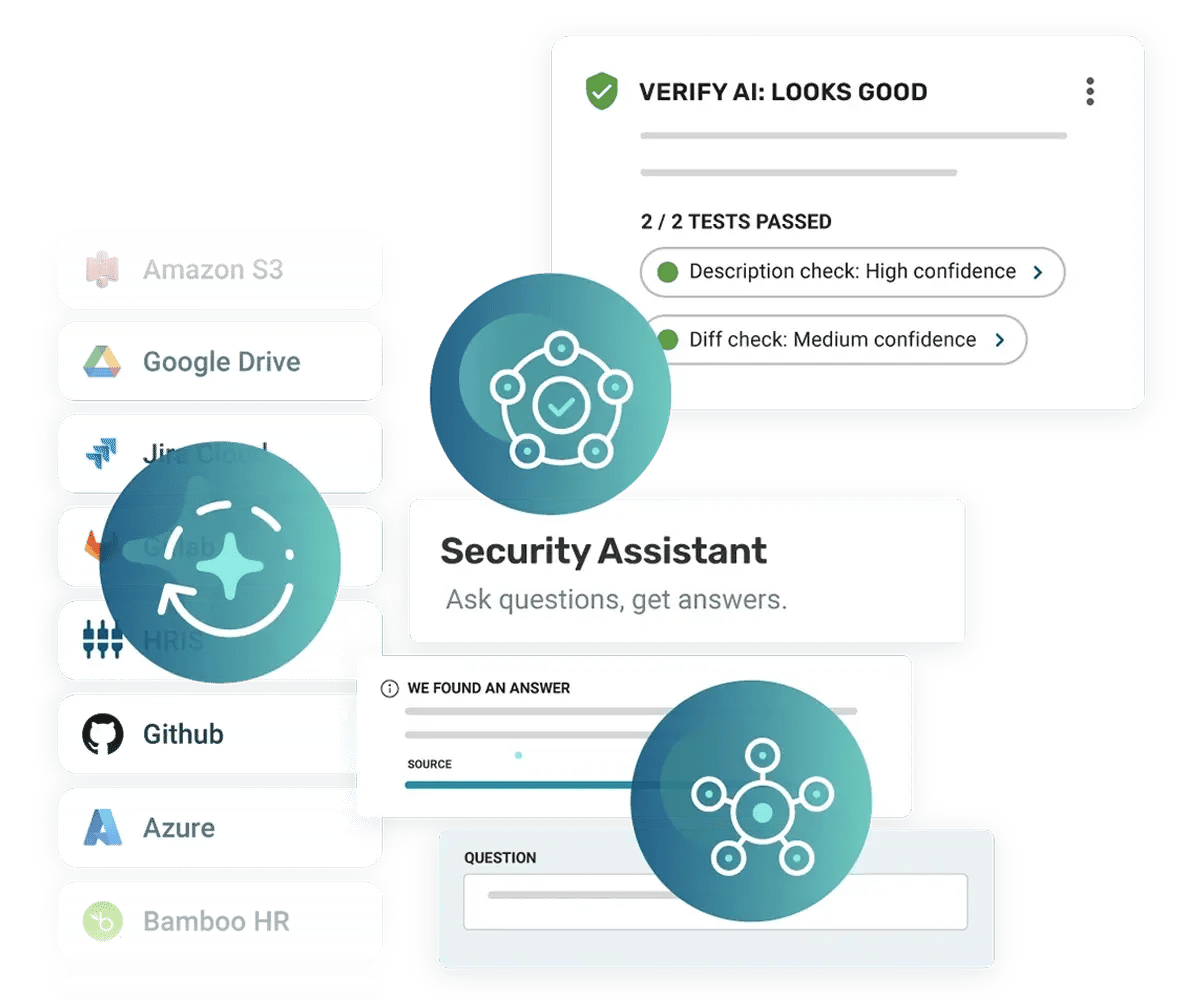
- Verify AI automation layer pulling 5,000+ data points for intelligent compliance automation
- No concurrent operation limits
Strike Graph earned high performer status in 18 different G2 reports for winter 2025, with top rankings for Results Index and Relationship Index (G2 Strike Graph).
Architectural comparison summary
|
Aspect |
Strike Graph |
Archer IRM |
|
Core design |
Purpose-built AI-native compliance automation |
Document management with a compliance layer |
|
Data model |
Control-centric with intelligent evidence mapping |
Hierarchical (Solution→Application→Record) |
|
Backend |
Cloud-native microservices |
SQL Server, .NET/C# |
|
API architecture |
RESTful with OAuth 2.0 |
SOAP + REST with session tokens |
|
Scalability limit |
No artificial limits |
10 concurrent data feeds |
|
AI integration |
Native AI throughout the platform |
Retrofitted capabilities |
 Automation capabilities vs. manual workflows
Archer IRM: Manual-first with limited automation
Archer's primary evidence collection model requires manual human intervention at every step:
Primary method: manual upload to evidence repository (Source: Archer Help Center - Evidence Management)
- User navigates to the Evidence Repository application
- Clicks "Add New" to create evidence record
- Manually fills in metadata fields (Document Name, Document Date, etc.)
- Selects Document Location (upload as attachment or UNC path to file share)
- Submits record through approval workflow
Secondary method: scheduled data feeds
- Runs at scheduled intervals (not real-time)
- Maximum 10 concurrent data feeds
- Primarily creates placeholder records, not actual evidence gathering
- Requires manual configuration of transport, field mapping, and scheduling
Critical review: "It's a very archaic tool compared to other products; little to no automation capability."
— Capterra Review (Capterra RSA Archer)
Third-party required for true automation: The Archer documentation reveals that true automated evidence collection requires licensing a separate third-party product (Auditmation™), confirming this is not a native platform capability. Source: Archer API Integration Documentation
Strike Graph: Native continuous automation
Strike Graph provides native, continuous, automated evidence collection without third-party tools:
Zero-Trust integration architecture:
- One-time OAuth connection to target system (AWS, GCP, GitHub, Okta, etc.)
- Zero-trust connectors continuously monitor configured systems
- Evidence automatically collected via APIs 2-3 days before expiration
- AI engine maps collected evidence to applicable controls
- Compliance dashboard updates in real-time with evidence status
Quote from documentation: "Automated collection enables our evidence service to recollect an evidence attachment from an integration point up to 2-3 days ahead of the evidence's expiration date... Strike Graph will collect the most up-to-date version just before the evidence expires."
— Strike Graph Help Center
AWS evidence collection (25+ documented types):
- IAM User Access Lists with MFA status
- Administrator Access configurations
- Security Group rules and network ACLs
- CloudWatch logging and monitoring configs
- S3 bucket encryption and versioning policies
Google Cloud platform (20+ evidence types):
- IAM policies and role assignments
- Cloud Logging and monitoring
- Network security configurations
- Service account key rotations
Architectural comparison summary
|
Aspect |
Strike Graph |
Archer IRM |
|
Evidence collection |
Continuous automated collection |
Manual upload + scheduled feeds |
|
Real-time monitoring |
Native capability |
Not native (requires third-party) |
|
Data feed limit |
Unlimited parallel collection |
10 concurrent maximum |
|
Integration setup |
OAuth-based, no coding |
Custom C# development required |
|
Evidence mapping |
Manual relationship definition |
AI-powered automatic mapping |
|
Third-party tools |
Not required |
Required for automation (Auditmation™) |
 Evidence collection methodologies
Archer IRM: Storage-centric approach
Archer's evidence approach focuses on evidence storage rather than evidence collection:
Evidence repository characteristics:
- Evidence stored as attachments within Archer records
- File size limitations on attachments
- Alternative: Store files on network shares with UNC paths
- No built-in evidence aggregation from multiple systems
Data gateway limitations: ( Source: Archer Data Collection Documentation )
- Only supports Microsoft SQL Server external databases
- Each table/view requires a separate connection configuration
- External database must have a single-column primary key
- Limited field type support: Date, Text, Numeric, IP only
- Cannot pull evidence/documents from external systems
- Requires manual DLL development for non-SQL databases
Customer review: "GRC teams using Archer often find themselves spending a significant amount of time on manual tasks, such as reporting and user management."
— V-Comply Analysis (V-Comply Archer Alternatives)
Third-party required for true automation: The Archer documentation reveals that true automated evidence collection requires licensing a separate third-party product (Auditmation™), confirming this is not a native platform capability. Source: Archer API Integration Documentation
Strike Graph: Collection-centric approach
Strike Graph's evidence approach focuses on automated collection from source systems:
Zero-Trust connector architecture:
- 100+ pre-built integrations for automated evidence collection
- Read-only access model (no write permissions to customer systems)
- OAuth 2.0 authentication for secure connection
- Evidence collected directly from source via API
- No screenshots or manual uploads required for integrated systems
Terraform integration (unique capability): Strike Graph provides native Terraform modules for AWS, Azure, and GCP integration:
"Using Quick Start with the Terraform for AWS integration... Common Terraform for AWS Data Sources enable automated collection of security configurations across your AWS infrastructure." — Strike Graph Terraform Integration
Infrastructure-as-code becomes evidence-as-code:
- Terraform state files automatically parsed for compliance-relevant data
- Changes to infrastructure automatically reflected in compliance posture
- No manual configuration of individual evidence items
Evidence collection comparison
|
Aspect |
Strike Graph |
Archer IRM |
|
Primary model |
Automated collection |
SQL Server only via Data Gateway |
|
External systems |
100+ systems via OAuth |
Screenshots, manual exports |
|
Evidence source |
Direct API collection |
Screenshots, manual exports |
|
Infrastructure-as-code |
Native Terraform integration |
Not supported |
|
File evidence |
Auto-collected from source |
Stored as attachments |
|
Collection frequency |
Continuous real-time |
Scheduled batch |
 Time to compliance value
Archer IRM: Months-long implementation
Typical implementation timeline: 3-6 months (or longer)
Implementation phases:
|
Phase |
Duration |
Activities |
|
Planning & discovery |
2-4 weeks |
Define use cases, map data model, and plan professional services |
|
Configuration |
6-12 weeks |
Configure applications, fields, workflows, and dashboards |
|
Integration development |
4-8 weeks |
Custom API development, data feed configuration |
|
Training & rollout |
2-4 weeks |
Administrator training, user training, documentation |
Customer review:
"It was very nuanced to create the custom dashboards + necessary approval workflows and required multiple resources on our end, including hiring a full-time dedicated Archer RSA expert on our team." — G2 Review (SmartSuite ArcherIRM Pricing Analysis)
Third-party required for true automation: "Archer's implementation can be up to hundreds of thousands of dollars." — 6clicks Comparison Guide
Strike Graph: Collection-centric approach
Typical implementation timeline: 7-14 Days
|
Day |
Activities |
|
Day 1 |
Sign up, invite team, select frameworks, activate controls |
|
Day 2-3 |
Connect integrations (AWS, GCP, Azure, HRIS, SSO, code repos) |
|
Day 4-5 |
Review auto-collected evidence, upload manual evidence for policy controls |
|
Day 6-7 |
Invite auditor, review dashboard, address gaps, generate reports |
Implementation characteristics:
- Self-service onboarding (no mandatory professional services)
- Pre-built integrations work immediately
- Average implementation: 8 business days (validated capability)
- 40-80 internal hours vs. 500-1,200 hours for Archer
Time to Value Comparison
|
Metric |
Strike Graph |
Archer IRM |
|
Implementation timeline |
7-14 days |
3-6 months |
|
Internal hours required |
40-80 hours |
500-1,200 hours |
|
Professional services |
Optional ($0 typical) |
Required ($50K-$200K+) |
|
Time to first audit |
60-90 days |
8-15 months |
|
Custom development |
Not required |
Required |
 Total cost of ownership
Archer IRM: Complex pricing with hidden costs
Base platform costs: ( Source: SmartSuite ArcherIRM Pricing Analysis )
- Starting price: $55,000/year for basic suite
- Single-license subscription: ~$144,000/year ($12,000/month) reported
- Enterprise implementations: $150,000-$500,000+/year
|
Archer’s additional costs |
Typical range |
|
Implementation/professional services |
$50,000-$400,000 |
|
Dedicated administrator(s) |
$85,000-$260,000/year (1-2 FTE) |
|
Custom integration development |
$15,000-$100,000 per integration |
|
Third-party automation tools |
$15,000-$50,000/year |
|
Training |
$2,000-$5,000 per person |
|
Annual renewal increases |
10-15% year-over-year |
Customer experience with pricing:
"The initial purchase is cheap. You pay a nominal price to start, then renew the license annually. You also must buy a license for each module. I'm not too fond of that aspect of the licensing model. You buy the elephant and then spend more money to feed the elephant."
— PeerSpot Review (PeerSpot RSA Archer Reviews)
3-Year TCO example (mid-market: 500 employees): (Source: Analysis derived from project documentation and pricing research)
|
Year |
Archer IRM Costs |
|
Year 1 |
$485,000 (Platform: $85K, Implementation: $175K, Admin: $150K, Integration: $50K, Training: $25K) |
|
Year 2 |
$361,000 (Platform: $93.5K, Admin: $157.5K, Module: $35K, Customization: $60K, Training: $15K) |
|
Year 3 |
$383,225 (Platform: $102.9K, Admin: $165.4K, Customization: $75K, Integration: $25K, Training: $15K) |
|
3-Year Total |
~$1,229,225 |
Strike Graph: Transparent, Predictable Pricing
Implementation characteristics:
- Self-service onboarding (no mandatory professional services)
- Pre-built integrations work immediately
- Average implementation: 8 business days (validated capability)
- 40-80 internal hours vs. 500-1,200 hours for Archer
3-Year TCO example (mid-market: 500 employees):
|
Year |
Strike Graph Costs |
|
Year 1 |
$66,000 (Platform: $36K, Audit: $30K, Implementation: $0) |
|
Year 2 |
$87,000 (Platform: $40K, ISO Framework: $12K, Audit: $35K) |
|
Year 3 |
$85,000 (Platform: $45K, Audit: $40K) |
|
3-Year Total |
~$238,000 |
Implementation characteristics: Additional savings from Strike Graph’s “Verify AI”
- Internal audit replacement: $15,000-$22,000/year × 3 = $45,000-$66,000
- Net 3-Year Cost: $172,000-$193,000
Time to Value Comparison
- 3-Year Savings vs. Archer: $991,000-$1,057,000
- Percentage Savings: 81-86%
|
Cost component |
Strike Graph |
Archer IRM |
|
Platform fees |
$121,000 |
$281,350 |
|
Implementation |
$0 |
$175,000 |
|
Administrator FTEs |
$31,500 |
$472,875 |
|
Customization/integration |
$0 |
$185,000 |
|
Additional modules |
Included |
$35,000 |
|
Training |
Included |
$55,000 |
|
Third-party tools |
Included |
$25,000+ |
|
Total |
$238,000 |
$1,229,225 |
|
Net with Verify AI |
$172,000-$193,000 |
- - |
 Target user persona & organizational model
Archer IRM: Centralized enterprise GRC teams
Primary buyers:
- Chief Risk Officer (CRO)
- Chief Compliance Officer (CCO)
- VP of Internal Audit
- Enterprise Risk Management Directors
Organizational model:
- Centralized internal audit teams
- Corporate legal and compliance departments
- Large risk management organizations (5-10+ FTEs)
- Fortune 500 and Global 2000 enterprises
User profile:
"Archer is the SAP of GRC. It makes sense if you're a F500 and can throw a handful of analysts at it to keep collections and reporting flowing." — Reddit user comment cited in 6clicks Analysis
Typical organization profile:
- 5,000+ employees
- Dedicated 5-10 person GRC team
- $1M+ GRC budget
- Multiple business units requiring coordination
Strike Graph: Distributed Security & Compliance Teams
Primary buyers:
- Chief Information Security Officer (CISO)
- VP of Security
- Director of Compliance
- Security engineering leaders
Organizational model:
- Distributed security, privacy, and DevOps teams
- Organizations with 0-2 dedicated compliance staff
- Teams seeking compliance as an enabler (not overhead)
- Mid-market technology companies
User profile:
- 50-2,000 employees
- Limited compliance headcount
- Cloud-native technology stack
- Need compliance for sales enablement (SOC 2, ISO 27001)
Market Validation: Strike Graph serves 300+ customers across industries, supports 25+ frameworks, and focuses on technology companies seeking enterprise customers.
 Compliance philosophy (point-in-time vs. continuous)
Archer IRM: Periodic assessment model
Compliance approach:
- Designed around periodic audit cycles (quarterly, annual assessments)
- Point-in-time evidence snapshots
- Assessment-driven workflows
- Batch processing of compliance data
Evidence collection timing:
"Data feeds copy information into an Archer database at scheduled intervals. This is the primary mechanism for importing data from external systems." — Archer Data Collection Documentation
Operational reality:
- Evidence gathered during audit preparation periods
- Compliance posture only visible after manual updates
- Gaps discovered during audit preparation (often too late)
- "Audit scramble" pattern is common
Strike Graph: Continuous compliance model
Compliance approach:
- Real-time continuous monitoring with Verify AI
- Evidence automatically recollected before expiration
- Always audit-ready posture
- Proactive gap identification
Continuous monitoring features:
- Evidence automatically collected 2-3 days before expiration
- Real-time compliance dashboard
- Verify AI provides automated control testing
- Predictive compliance analytics
Operational reality:
- Always-on compliance visibility
- Gaps identified as they occur
- Audit preparation measured in hours, not weeks
- Continuous improvement vs. periodic scramble
 Multi-framework cross-mapping intelligence
Archer IRM: Module-based framework licensing
Framework approach:
- Each framework requires separate module licensing
- SOC 2 module, ISO 27001 module, etc.
- Manual mapping between frameworks required
- Evidence duplication across modules
Pricing impact:
"You also must buy a license for each module." — PeerSpot Review (PeerSpot RSA Archer Reviews)
Configuration burden:
- 40+ hours to manually configure cross-framework mappings
- Each new framework requires significant setup
- 2-4 months is the typical timeline for a new framework addition
Strike Graph: Many-to-many intelligent architecture
Framework approach:
- Many-to-many architecture across 25+ frameworks
- Auto-maps controls/risks/evidence across frameworks simultaneously
- Single piece of evidence satisfies requirements across multiple frameworks
- AI understands control relationships
Cross-framework intelligence:
- SOC 2 to ISO 27001 mapping automated
- CMMC to NIST 800-171 relationships understood
- Evidence collected once, mapped everywhere applicable
- Compounding ROI for multi-framework organizations
Framework activation:
- New framework activation: Minutes (not months)
- AI automatically maps existing evidence to new controls
- No manual relationship configuration required
 Enterprise Workspace Management
Archer IRM: Centralized Single-Instance Model
Architecture:
- Single-instance deployment model
- Centralized data repository
- Limited multi-tenant capabilities
- Complex permission structures for business unit separation
Enterprise challenges:
- Merging Archer instances during M&A is complex
- Subsidiary autonomy limited
- Cross-business-unit reporting requires custom development
Strike Graph: Multi-Tenant Workspace Management
Architecture:
- Multi-tenant workspace management
- Publish/sync capabilities between workspaces
- Federated dashboards across entities
- Parent/child organization hierarchies
Enterprise capabilities:
- Ideal for holding companies and PE portfolios
- Each business unit maintains autonomy
- Centralized visibility without centralized control
- M&A integration simplified through workspace model
 Developer/DevOps integration (compliance-as-code)
Archer IRM: Traditional GRC tooling
Integration model:
- No native Infrastructure-as-Code support
- Custom C# development required for integrations
- WSDL file generation for SOAP integrations
- Visual Studio projects for API code
DevOps reality:
"The Web Services API code generator automates the creation of human-readable variables that facilitate WebAPI development in C# (CSharp)... The source code can be downloaded as a .cs file and imported into Visual Studio projects." — Archer API Integration Manager
Modern stack gaps:
- No Terraform integration
- No CI/CD pipeline native support
- No GitOps workflows
- Manual evidence collection from cloud infrastructure
Strike Graph: Compliance-as-code native
Integration model:
- Native Terraform integration for AWS, Azure, GCP
- CI/CD pipeline integration capabilities
- GitOps-friendly workflows
- Infrastructure state files as compliance evidence
Terraform integration details:
"Terraform for AWS integration... Using Quick Start with the Terraform for AWS integration... Common Terraform for AWS Data Sources enable automated collection of security configurations." — Strike Graph Terraform Integration
DevOps alignment:
- Infrastructure-as-Code becomes evidence-as-code
- Changes to infrastructure automatically reflected in compliance
- Developer-friendly APIs and documentation
- Modern authentication (OAuth 2.0)
 Support model & self-service capability
Archer IRM: Consultant-dependent model
Support requirements:
- Requires dedicated administrators (18-24 months of experience recommended)
- Heavy reliance on professional services
- External consultants for basic system changes ($150-$250/hour)
- Continuous training for internal teams
Customer experience:
"Businesses often require dedicated administrators, external consultants for basic system changes, and continuous training for internal teams." — V-Comply Analysis
Administrator burden:
- 10-15 hours/week is the typical administrator workload
- Dashboard modifications require an administrator
- Report customization needs technical expertise
- 2-4 week backlog is common for customization requests
Strike Graph: Self-service platform model
Support characteristics:
- 9.6/10 G2 support rating
- Self-service platform design
- No dedicated administrator required
- Comprehensive documentation and guides
User empowerment:
- Users configure dashboards without administrator
- Self-service framework activation
- Intuitive interface requires <1 hour of training
- High adoption rates due to consumer-grade UX
Market validation: Strike Graph achieved High Performer status across 18 G2 reports with top rankings for Relationship Index, indicating strong customer satisfaction with support and ease of use (G2 Strike Graph).
Built for teams that take compliance seriously
Strike Graph is your customers' trusted compliance platform

.svg)
.svg)
.svg)
.svg)

Used by security and compliance leaders in SaaS, HealthTech, FinTech, and more

Designed by compliance practitioners, not consultants

Built to scale from first framework to enterprise compliance